Is it worth paying extra for microinverters instead of a traditional inverter?
Time to read: 13 min.
Photovoltaic microinverters offer independent operation for each module. Unlike a central inverter, where the failure of one panel reduces the power of the entire string, microinverters optimize energy yield. Differentiating these solutions is key to system efficiency. Find out which solution is best for your installation.
Table of contents
A photovoltaic installation is a significant decision. Choosing the right inverter affects system efficiency for decades. Increasingly, investors are wondering if microinverters instead of a traditional inverter are truly a better option, or just a more expensive one.
The difference between the two solutions isn’t just about the purchase cost. The way they work, reliability, energy yield, and installation flexibility are factors that genuinely translate into system effectiveness. The answer to the question about subsidies for microinverters isn’t simple, as it depends on the specific roof conditions and the owner’s expectations.
Each of these solutions has its strengths. A central inverter works perfectly in simple, uniform installations. Photovoltaic microinverters gain an advantage wherever the panel operating conditions are varied. The following sections clarify these differences in a practical, fact-based manner.
How Do Microinverters Work Differently Than a Traditional Inverter?
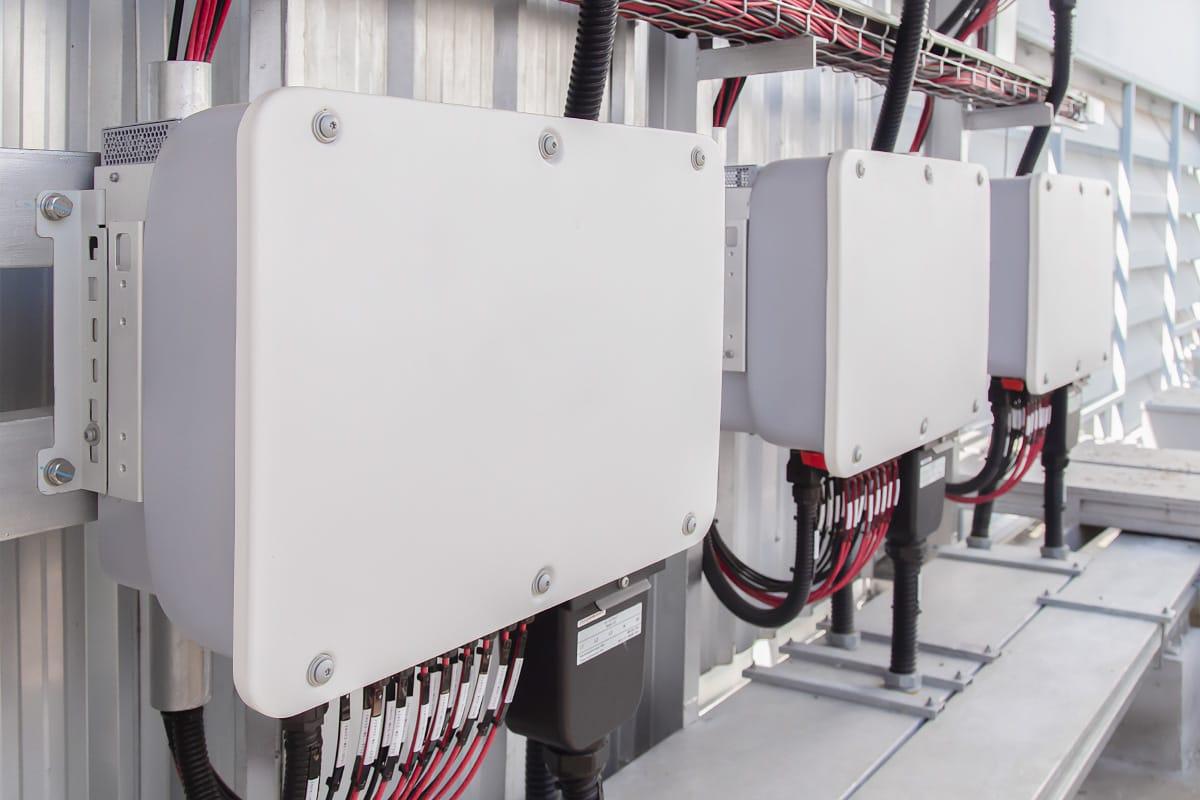
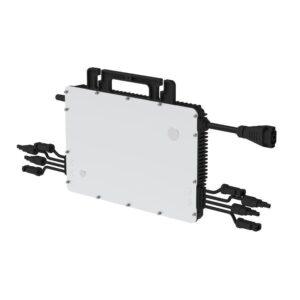
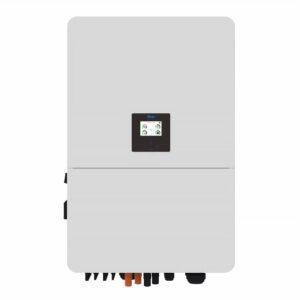
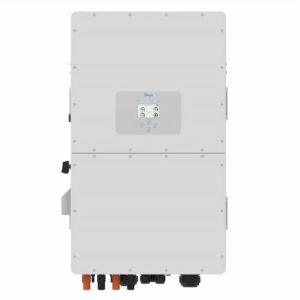
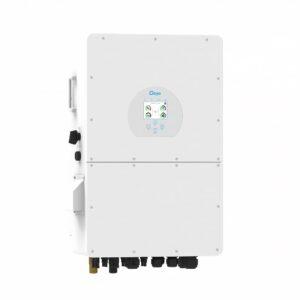
Understanding the difference in the construction of both systems allows for an informed assessment of which solution is suitable for a specific installation. A central inverter collects direct current from all panels in one location and then converts it into alternating current. Microinverters work completely differently: each panel has its own small device that immediately processes the energy produced.
Independent Operation of Each Photovoltaic Module
In a system with a central inverter, all panels form a single electrical chain, known as a string. If one module performs poorly, the entire chain loses power. This phenomenon is called the weakest link effect.
Microinverters break this pattern. Each panel operates independently, without affecting adjacent modules. The failure or soiling of one panel does not reduce the output of the entire installation.
This approach is particularly important on roofs where some modules are exposed to shading or soiling. The system remains functional even when a single module temporarily operates at lower power.
Maximum Power Point Tracking at the Individual Panel Level
Each photovoltaic panel has its maximum power point, or MPP. A central inverter tracks this point for the entire string at once. Microinverters track it separately for each module.
The MPP tracking algorithm adjusts voltage and current to current sunlight conditions. With varied shading or different temperatures of individual panels, microinverters extract the maximum potential from each module. A central inverter has to compromise in such conditions.
Studies show that devices with module-level MPPT can generate 15% to 30% more energy than traditional solutions in unfavorable conditions.
Lower DC Voltage as a Safety Feature for the Installation
A central inverter requires high DC voltage, often reaching 600 to 1000 V. Such voltage poses a serious risk to installers and firefighters in the event of a fire.
Microinverters operate with the DC voltage of a single panel, typically 30 to 60 V. This voltage is safe for humans. The system immediately converts direct current to alternating current at the module itself, eliminating long, high-voltage cables on the roof.
The safety of a photovoltaic installation with microinverters is at a significantly higher level. European standards are increasingly focusing on this aspect, especially in residential buildings.
Real-time performance monitoring of each module
Systems based on microinverters allow for continuous monitoring of each panel’s operation individually. The installation owner can see exactly which module is producing less energy and why.
A central inverter provides aggregated data for the entire installation. Detecting a problem with one panel requires additional diagnostic equipment or a physical inspection of the roof.
Real-time photovoltaic monitoring speeds up fault response and reduces downtime. This is a particularly valuable feature for installations covering large roof areas.
Do microinverters provide a genuinely higher energy yield?
Higher energy yield is one of the main arguments for paying extra for microinverters. However, the reality is more complex. The advantage in energy production clearly appears under specific conditions, while in others, it is minimal or nonexistent.
The efficiency of a photovoltaic system depends on many factors simultaneously: panel orientation, roof pitch, local climate, and degree of shading. Each of these elements influences whether microinverters actually deliver more energy than a central inverter.
The impact of partial shading on installation energy yield
Shading is the biggest enemy of installations with a central inverter. Even a small shadow on one module can reduce the production of an entire string. With partial installation shading, this effect can be surprisingly strong.
Microinverters minimize this problem. Each panel operates independently, so a shadow on one module does not stop the others. Studies have shown that with 7% installation shading, the additional yield from microinverters does not exceed 1%, whereas with 25% shading, the annual yield increases by 4.3%.
This leads to an important practical principle: the greater the shading problem, the stronger the argument for choosing microinverters. On a roof without any shade, the difference in production between the two systems is minimal.
Microinverter efficiency versus grid-tied inverter efficiency
Conversion efficiency is the ratio of a device’s input power to its output power. Central inverters achieve efficiencies of 97% to 98%. Microinverters typically fall within the range of 95% to 97%.
Parameter
Microinverter
Central Inverter
Conversion Efficiency
95–97%
97–98%
DC Voltage
30–60 V
600–1000 V
Lifespan
20–25 years
10–15 years
MPPT
Per module
Per string
Shading Impact
Minimal
High
Monitoring
Per module
Per installation
Conversion efficiency alone does not determine system choice. Under varied operating conditions, microinverters with individual MPPT can deliver more energy to the grid, despite having slightly lower efficiency in the device itself.
When varied panel orientation reduces overall system performance
Houses with multi-pitched roofs often have panels facing multiple directions. A central inverter must manage all directions within one or several strings. South-facing and west-facing panels connected in a single string will never achieve optimal operation simultaneously.
Microinverters operate without compromise in varied orientations. A panel on a south-facing slope and a panel on a west-facing slope operate independently, each at full power at the appropriate time of day.
Installations on multi-pitched roofs with different cardinal directions are a classic scenario where microinverters with non-uniform module spacing demonstrate a clear advantage in annual energy yield.
Cost of microinverters versus traditional inverters: which is more expensive?
Assessing the cost-effectiveness of microinverters cannot be limited to comparing purchase prices. A complete picture only emerges after considering costs over the entire system lifecycle. A central inverter is cheaper initially but requires replacement during the system’s operational life.
The total cost of owning a photovoltaic installation is the sum of expenses for purchase, installation, operation, and service over 25 years or more. Only this perspective allows for a reliable comparison of both solutions.
Operating costs of PV installations vary significantly between systems. Below are the most important components influencing the long-term bill.
Components of the total cost of ownership:
cost of purchasing equipment and installation
number of inverter replacements required over 25 years
costs of repairs and service interventions
energy production losses due to failures
costs of future system expansion
Each of these factors is distributed differently between microinverters and a central inverter. Details below.
Higher initial cost for microinverter-based installations
An installation with microinverters is more expensive to purchase and install than a system with a central inverter. The cost is due to the number of devices: for 12 panels, 12 microinverters are needed instead of one inverter. Each requires separate connection and mounting.
Installation takes longer, and the installer needs more time for wiring and system configuration. The increased workload directly translates to the service bill.
The higher initial cost is a real barrier, especially for small installations. The cost balance only begins to equalize after several or more years, when the central inverter requires its first replacement.
Lifespan of microinverters versus operational life of a central inverter
A standard central inverter operates for 10 to 15 years. For a photovoltaic installation designed for 25 or 30 years, at least one, and often two, device replacements are necessary.
Microinverters have a significantly longer lifespan. Manufacturers offer warranties of up to 20 to 25 years for them. This is due to the reduced load on each device: it operates at the power of a single panel, not the entire system.
With a 25-year operational outlook, the longevity of microinverters can offset their higher purchase cost. A microinverter system can last through the entire service life of the installation without any inverter replacement.
Service and Replacement Costs for a Single Device Failure
The failure of a central inverter halts the entire installation. Every day without a functioning inverter means lost production from all panels. The waiting time for service and replacement can range from a few days to several weeks.
The failure of a single microinverter stops production from only one panel. The remaining modules operate without interruption. Production loss is minimal, and the repair is not urgent.
Replacing a damaged microinverter is simple and inexpensive. A technician replaces the specific device without needing to dismantle the entire installation. The costs of a single intervention are significantly lower than replacing a central inverter.
Tip: When planning an installation, it is worth asking the installer to calculate the total cost of ownership of the system over a 25-year horizon, including the cost of replacing a central inverter. Such a calculation often changes the perspective on the cost-effectiveness of microinverters.
Microinverters and Photovoltaic Inverters for Installers in the Besteon Wholesale Offer
Besteon Photovoltaic Wholesale specializes in supplying components for photovoltaic installations to installation companies and professional contractors. The assortment includes both photovoltaic microinverters and grid-tied inverters of various types, allowing for equipment to be matched to the requirements of any installation.
Besteon collaborates with renowned PV equipment manufacturers, which translates into the quality and reliability of the offered products. Each device comes from trusted suppliers, and the wide selection enables the choice of an optimal solution for both small home installations and larger commercial systems.
Microinverters and Inverters Available at the Wholesale Store
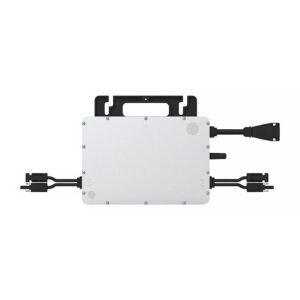
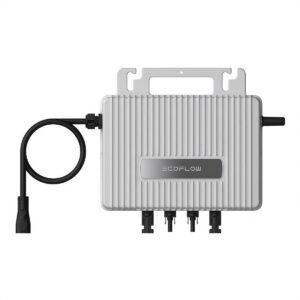
Besteon’s offer includes photovoltaic microinverters designed for installations on roofs with complex shapes, partial shading, or multi-slope structures. The devices support one to four panels each, operate with a low DC voltage up to 60 V, and feature individual maximum power point tracking.
Available device types:
microinverters for installations with independent operation of each module
single-phase inverters for small home installations
three-phase inverters for larger systems
hybrid inverters compatible with energy storage systems
For installers seeking classic solutions, photovoltaic inverters are also available in on-grid and off-grid versions. The devices are equipped with MPPT algorithms, remote monitoring systems, and protection against overloads and surges.
Besteon serves installation companies nationwide, ensuring efficient order fulfillment and expert support in equipment selection. Customers regularly rate the quality of service, and their positive reviews confirm the wholesale company’s reliability and professionalism.
Orders are processed efficiently, and the technical department provides assistance in choosing the right devices for a specific project. For installers planning to expand their offerings or seeking technical support, direct contact with the Besteon team is available to answer questions about product selection and cooperation terms.
For What Roofs and Installations Are Microinverters a Good Choice?
Not every photovoltaic installation will benefit equally from microinverters. There are situations where their advantages are obvious and clear. There are also cases where a central inverter is sufficient.
Choosing an inverter for roof conditions is a decision best made after assessing the specific property. Several key factors clearly indicate the advisability of choosing microinverters.
Signs that microinverters will be a better solution:
Shading from chimneys, antennas, or trees appears on the roof
The roof has more than one slope facing different directions
Later expansion of the installation is planned
The installation is small and needs to be scalable
Electrical safety is a priority
The situation is clear: the more of these factors apply to a given property, the stronger the argument for choosing microinverters instead of a traditional inverter.
Irregular Roof Shape or Multi-Slope Construction
A roof with an irregular shape rarely allows for panels to be laid in even, identical rows. Some modules are placed on small surfaces, others on larger areas. Creating an effective string from such panels is difficult or impossible.
Microinverters on a multi-slope roof solve the problem of lack of uniformity. Each panel operates independently of the others. Modules from different slopes can be combined into one system without compromising performance.
Photovoltaic installation on a complex roof with microinverters is flexible. There is no need to give up part of the surface just because it doesn’t fit an optimal string layout. This means higher installed capacity and better annual energy yield.
Small photovoltaic installations and the possibility of gradual expansion
Microinverters allow you to start with a small system and expand it gradually. A new panel with its own microinverter can be added to an existing installation at any time. There is no need to replace the central inverter with a more powerful model.
A scalable photovoltaic installation is particularly attractive to owners who plan to increase their energy consumption in the future, for example, after purchasing an electric car or a heat pump.
With a central inverter, expansion is possible but more complicated. Changing the system’s capacity often requires replacing or adding an additional inverter. The modularity of microinverters eliminates this problem entirely.
Tip: Before choosing a system, it is worth assessing your plans for expanding the installation over the next 5 to 10 years. If electricity consumption is expected to increase, microinverters offer the flexibility to expand without additional design costs.
FAQ: Frequently Asked Questions
Do microinverters actually increase energy production compared to a central inverter?
Microinverters increase energy production primarily when the operating conditions of the panels are not uniform. Each module has its own device with a maximum power point tracking algorithm, allowing it to operate at full efficiency independently of adjacent panels. In the absence of shading, the difference in annual yield is minimal.
When shade from a chimney, tree, or antenna appears on the roof, the situation changes dramatically. The central inverter must adjust the operation of the entire string to the weakest performing cell. Microinverters, with partial shading, generate several to over a dozen percent more energy annually. On uniform roofs without shade, there is very little difference between the two systems.
How long do microinverters last, and do they really not require replacement for 25 years?
Microinverter manufacturers offer warranties ranging from 20 to 25 years, which is a significantly longer period than the standard 10 to 12 years for central inverters. The long lifespan is due to the load on each device: each photovoltaic microinverter handles the power of only one panel, so its components wear out more slowly.
A central inverter in an installation designed for 25 or 30 years requires at least one replacement, sometimes two. Each replacement incurs the cost of purchasing a new device and labor. A system based on microinverters can go through the entire lifespan of the installation without such intervention. This is a real difference in the total operating costs of the system.
Does the failure of one microinverter stop the entire photovoltaic system from working?
No, a microinverter failure stops production from only one panel. The remaining modules work without any interference, and the system continues to supply energy to the grid or the home. This is a fundamental difference compared to a central inverter, the damage to which immobilizes the entire PV system.
Diagnosing the problem is simple because microinverter systems monitor the operation of each panel individually. A fault in one device is immediately visible in the application. Replacing a damaged microinverter does not require dismantling the rest of the system and is quick. The reliability of a system with microinverters is therefore clearly higher, and the risk of a complete shutdown is minimal.
Can a system with microinverters be easily expanded with additional panels?
Expanding a photovoltaic system with microinverters is very simple. Each new panel is installed with its own microinverter and connected to the existing system. There is no need to replace any other device or redesign the entire installation.
With a central inverter, adding new panels is more complicated. The inverter’s power must match the power of the entire system, so expansion often involves replacing it with a more powerful model. The modularity of microinverters completely eliminates such limitations, which is particularly important for owners planning to purchase an electric car or a heat pump in the future.
Summary
Microinverters instead of a traditional inverter are a justified solution under specific conditions, not always and everywhere. The advantage of microinverters is greatest on shaded, multi-slope roofs, and in systems planned for expansion. The long lifespan of the devices, electrical safety, and precise monitoring of each panel’s performance are real benefits that can outweigh the higher purchase cost over 25 years.
The decision to pay extra for photovoltaic microinverters should be based on an analysis of the specific roof and investment goals. On a simple, unshaded roof, a central inverter is still a very good and economical choice. Where conditions are more challenging, microinverters pay back the higher investment through better system performance over decades.
An expert with over 20 years of experience in the renewable energy industry. Founder of the photovoltaic wholesale company Besteon, which offers modern solutions in the field of green energy. The company specializes in the distribution of components for photovoltaic installations and collaborates with renowned international manufacturers. It implements innovative technologies that support the development of sustainable energy. The company focuses on building long-term relationships with clients by providing a personalized approach and the highest level of service.
Horizontal axis wind turbines (HAWT) and vertical axis wind turbines (VAWT) differ significantly. HAWTs require the rotor to be pointed directly into the wind. VAWTs capture energy regardless of the direction. Choosing the right type affects efficiency and costs. Understanding these differences is crucial for energy efficiency.
Energy storage capacity is crucial for photovoltaic system owners. Covering a home’s nighttime demand without electricity from panels prevents drawing from the grid. The average Polish home consumes 7-10 kWh per day. At night, this accounts for 40-70% of the total. Calculate realistic needs, taking into account the number of household members and heating.
A heat pump is a modern heating solution for homes without gas. The device extracts energy from the environment, ensuring comfort and low operating costs. Proper selection of the power and type of pump guarantees efficiency for years to come. Learn how to assess heat loss and choose the best device.
Choosing the location for a home EV charging station in your garage affects both convenience and safety. A poor location can generate costs and increase the risk of failure. Thoughtful placement of the charging point allows you to avoid many problems. Consider where you will best park your car.
Photovoltaics power the heat pump, reducing heating costs. A 6 kWp installation produces 100–150 kWh in winter and 600–900 kWh in summer. An annual energy balance is possible thanks to storage or feeding surpluses back into the grid. Is it realistic to operate solely on solar power?
A photovoltaic installation without optimizers loses between 5% and 30% of its energy annually. Losses result from shading, module mismatch, and panel degradation. A system without management at the individual panel level does not react to these phenomena. Understanding these mechanisms lowers energy yield. Learn how to prevent power loss.
Manage consent
To provide you with the best possible experience, we use technologies, such as cookies, to store and/or access information about your device. Consenting to these technologies will allow us to process data, such as browsing behavior or unique identifiers on this site. Failure to consent or withdrawal of consent may adversely affect certain features and functions.
Functional
Always active
Storage of or access to technical data is strictly necessary for the legitimate purpose of enabling the use of a specific service expressly requested by the subscriber or user, or for the sole purpose of carrying out the transmission of a message over an electronic communications network.
Preferences
Storage or technical access is necessary for the legitimate purpose of storing preferences that are not requested by the subscriber or user.
Statistics
Przechowywanie techniczne lub dostęp, który jest używany wyłącznie do celów statystycznych.Technical storage or access that is used solely for anonymous statistical purposes. Without a subpoena, voluntary compliance from the ISP, or additional records from a third party, information stored or retrieved solely for this purpose usually cannot be used to identify you.
Marketing
Przechowywanie lub dostęp techniczny jest wymagany do tworzenia profili użytkowników w celu wysyłania reklam lub śledzenia użytkownika na stronie internetowej lub na kilku stronach internetowych w podobnych celach marketingowych.